
I hate to rain on our Blue (and Yellow) parade.
Throughout the last few weeks of October till the night of November 3rd, the US midterm elections had been the focus of the entire world, and for good reason. Despite the supermajority control of the Legislative, Judicial, and Executive branches enjoyed by the President, this 119th Congress has passed fewer than 140 pieces of legislation in its entire existence. This is four times less than the average (500+) and the lowest amount in 40 years. Reflecting on the actions of this 119th Congress shows that this administration and party have not been ruling through their valuable powers, but leaning on repealable edicts and executive orders instead of enshrining their doctrines in law. Now, with the supermajority in Congress having flipped to the Democratic Party (56-44 in the Senate, 258-177 in the House, according to NBC), the campaign for support for Ukraine may face new challenges.
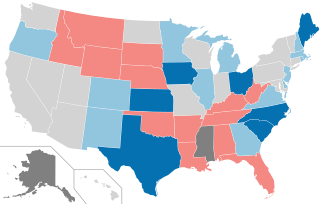
Since 2024, the pro-Ukrainian bloc in the Senate and House of Representatives has been constantly playing catch-up, following the unknown policies of the Presidency while trying to show verbal and material support for Ukraine. Despite the administration’s political maneuvering, deliveries of already allocated U.S. aid to Ukraine have continued. The most recent major approval came on October 30, 2026, when the U.S. State Department greenlit a $2.1 billion Foreign Military Sale of 500 Patriot missiles for Kyiv, and the Lindsey O. Graham Sanctioning Russia and Iran Act of 2026 was passed and signed into law against the Russian Federation. However, with the November midterms, pro-Ukrainian Republicans have retired or lost their seats, leaving a vulnerable gap in the bipartisan effort to support Ukraine.
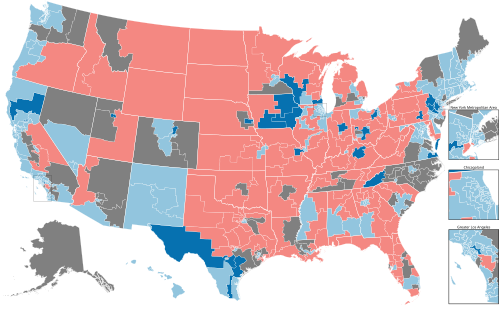
Eleven senators retired ahead of the 2026 midterms, ten of whom held substantial records sponsoring Ukraine aid and sanctions. These include Senate Ukraine Caucus leader Dick Durbin (D-IL) and Foreign Relations Committee member Jeanne Shaheen (D-NH). Rep. Brian Fitzpatrick (R-PA), a co-chair of the Congressional Ukrainian Caucus, lost his reelection bid to Democrat Bob Harvie—another pro-Ukraine Republican. Mike Lawler (NY-17) and Jen Kiggans (VA-2) also lost their seats last night. This should prompt the Ukrainian community to consider why the landslide happened and acknowledge that Ukraine wasn’t made an issue effectively enough for the median voter to translate it into a vote.
Ukrainians may have lost their initiative in Congress, and with it the chance at an eternal bipartisanship with non-Russophile Republicans. While pro-Ukrainian republicans have been voted out in the name of a Blue Wave, russian apologists like U.S. Representative Anna Paulina Luna (R-FL) and her posse have retained their seats for another term. While it is true that the vast majority of Republican candidates, like Vivek Ramaswamy and others, followed the president’s Russian stance, it is wrong to focus on what was prevented versus what was lost.
Ukrainians and their organizations have no right to claim victory in this election; to do so would be a lie about their actions and the motivations of the average American voter. These results should give nothing more than cautious optimism, and more scrutiny to those who will claim this as a chance to legitimize themselves. If we want optimism and pride, we must create our own reasons and victories, locally and nationally. We should also hope that the Ukrainian state refrains from following a path it took in 2024.
Let us build our hope not on American projections, but on our own hard-earned projects.