
A separatist movement astroturfed by neighboring imperial power, used by local politicians as a populist tool to get votes and as a threat against the central government? A resource economy frontier where people get fed cherrypicked data telling them the rest of the country is leaching off them, looks down on them for their hard work and is preventing them from prospering? Separatists claiming their recently elected liberal banker PM/President to be a fascist dictator? Fringe and violent political cranks not just allowed but encouraged, us vs them narrative blasted in an echo-chamber? Seen this movie before, didn’t like the ending.
A lot of comparisons have been drawn between Alberta separatism and Brexit, however being from Luhansk makes me notice numerous similarities with Donbas. The one that worries me most is that both were seen as a joke not worth paying attention to. I mean look, even the flags are alike! So, I decided to explore those and find out if the comparison holds any water and if there are any lessons to be learned there.
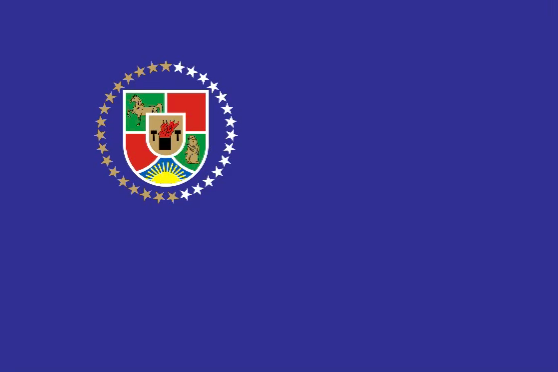
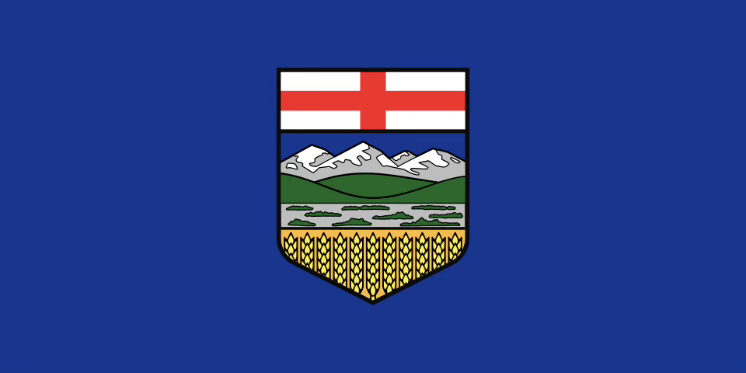
[Luhansk region and Alberta flags]
General picture
Alberta is a landlocked Canadian province that borders Montana to its south, its economy revolves around rich oil and gas reserves, forestry and farming, occasionally referred to as “The Texas of the North”. Previously being a frontier populated by First Nations and used for fur trade by Hudson’s Bay company, it was largely settled by the end of 19th century, after Canada displaced the native population. The settlers were Canadians, British, Americans from the Midwest, Scandinavians, Germans and Ukrainians. For a long time, its politics have been defined by claiming the capital and East coast are detached from Alberta, while its economy has been strongly interconnected with the USA. This trend is shared by western Canadian provinces and known as Western Alienation.
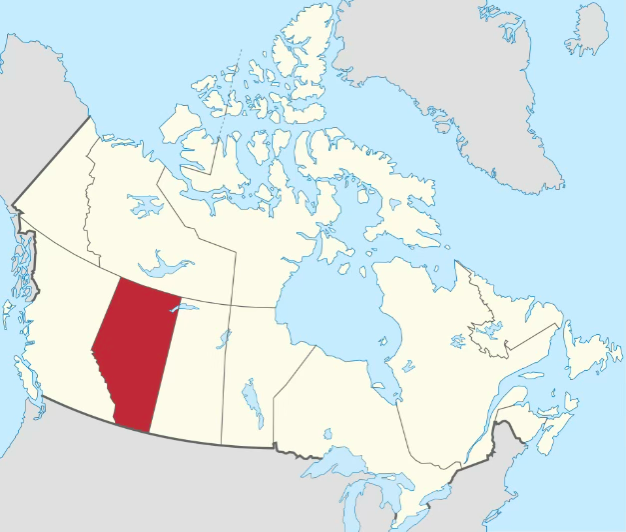
Alberta on the Canadian map
Now Donbas has changed its meaning as a term over the years. The name originates from the Donetsk coal basin, which includes large parts of the Donetsk and Luhansk regions in Eastern Ukraine, but also parts of the Dnipropetrovsk, Poltava and Kharkiv regions of Ukraine, and parts of the Rostov region of Russia. However nowadays it’s used synonymously with the Luhansk and Donetsk regions, eastmost in Ukraine, bordering Rostov in Russia. Similarly, they used to be a sparsely populated frontier defined by salt trade, until large industrialization efforts within the Russian empire in the end of 19th century. Donetsk grew as a factory town developed by Welsh industrialist John Hughes, Luhansk respectively – cannon factory town by Scottish industrialist Charles Gascoigne. The region revolved around coal mining and metallurgy, which took a heavy hit after the collapse of the USSR and economic anxieties were successfully shaped into blaming the capital elites and the western regions, its economy being previously strongly integrated with the former Soviet Union, particularly Russia.
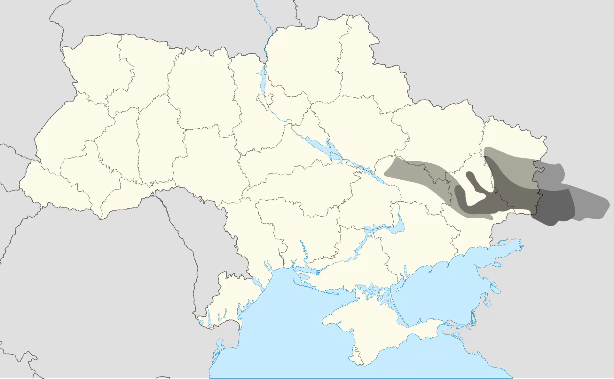
Wealth and political structure
One cannot discuss Donbas politics without talking about the fall of the USSR and “the 90s”. After the dissolution the people with political power turned out to be previous party elites, organized crime bosses who successfully used the weak state power to extort properties and industries, and “red directors” - people who ran big factories, a specific image of a politician who is both an everyman not afraid of hard work and a strict boss who “knows how to run things”. If you need a face to that image-think Alexander Lukashenko, the dictator of Belarus.
And from the early 90s these 3 groups in Donbas began to champion the causes of federalism and separatism. For factory bosses and organized crime, it was a simple way to increase and secure their wealth and power in the region, a threat to the capital to force concessions. And for the ex-party elite it was often irredentism, clinging to the past of the USSR.
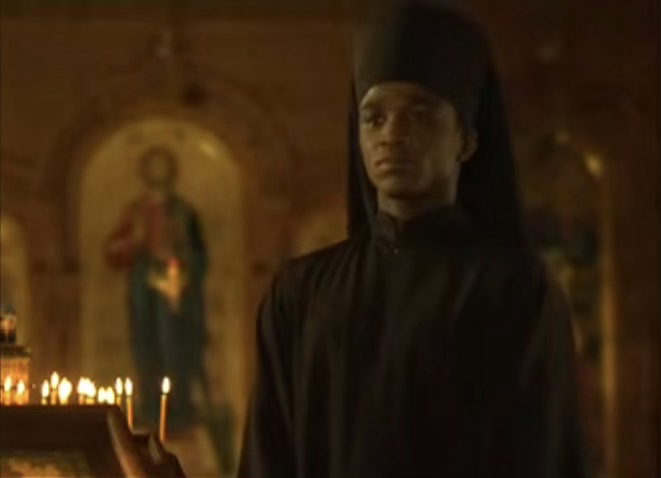
This is a good place to make one thing clear. Post Soviet communist parties have very little to do with leftism, Marxism or even workers’ rights. They are fueled by nostalgia for an imagined past, when jobs were plentiful, everything was cheap and high quality, everyone respected us and you were young and beautiful. Some are also nostalgic for the military might, for “being 1/6th of the global landmass” and “everyone feared and respected us”. That specific angle is beloved by Russian nationalists, who will easily simultaneously venerate the Empire, the USSR and the Federation, seeing them as a continuous project. Such nostalgia is as based on old Soviet propaganda posters as American conservatism is on 60s Coca Cola ads. Which is highlighted by the fact that they are most nostalgic for the Brezhnev era, when the USSR was stagnating and the project of communism was abandoned. Their base is at large homophobic, sexist and racist, Socialist party of Ukraine campaign in the 2000s was running ads fearmongering about black people in the orthodox church, gay people and oppression of the Russian language. Its leader was friends with Lyndon LaRouche and Alexander Dugin, the ideologist of modern Russian fascism. Their platform is keeping Soviet traditions alive (Soviet holidays, parades, memorials) and bringing back industrial jobs that died with the coal industry. And if this is enough to qualify as a leftist then every Republican voter in Appalachia is a card carrying communist.
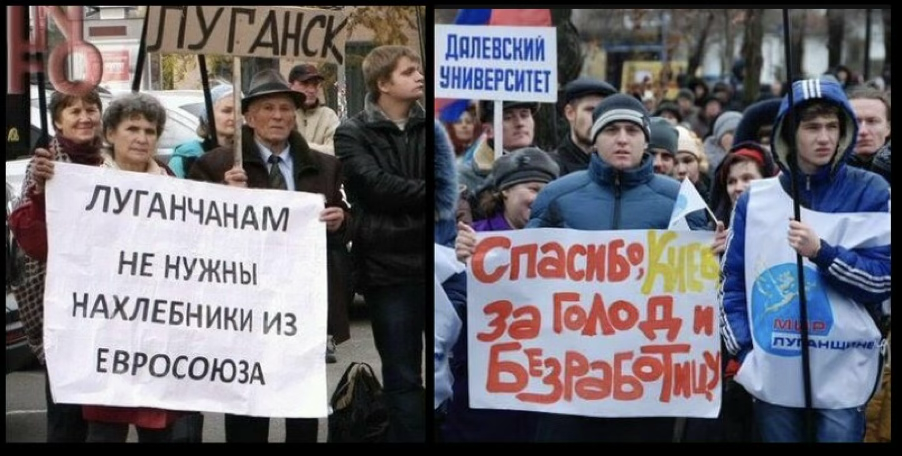
Tangent over, the economy was indeed doing badly. The impact of soviet mismanagement was revealed by the collapse, the trade connections were severed, certain industries became untenable. Inflation struck, it was not uncommon for salaries to be delayed for months or to be paid in necessities rather than cash. Which allowed for a convenient populist myth, boosted by local political elite, to take hold: The Western Elites in the capital are mismanaging and robbing the region. It was further expanded onto cultural differences, claiming the west hates the real workers who feed them, that they are all fascists, sold out to America or Europe, that the region is closer to Russia. However, the fire that fueled that narrative was economical. Often deployed hypocritically by local officials who were themselves selling factories for scraps and shutting down mines for unprofitability.
In 1993 a price hike led to a miners’ strike, which was supported by Donetsk mayor who held control of some striking mines, Yukhym Zvyahilsky. He successfully rode the wave of protest and used it to push the demand for regional autonomy. The central government caved and raised miners’ wages, which were still eaten up by inflation, and, crucially, appointed Zvyahilsky vice-prime minister, soon to become prime minister. This proved the viability of federalism/separatism as a political tool (Kazanskyi and Vorotyntseva 25).
In 1994 Leonid Kuchma, a “red director” of the Yuzhmash (Pivdenmash in Ukrainian) aerospace plant in South-Eastern Ukraine became president. He had huge approval in the Donbas and was seen as a guy who’d make factories run, trade with Russia flow and let regions do their own thing. But an economic miracle didn’t happen, and Kuchma turned out to be strongly unitarian, building a centralized state hierarchy, appointing the governors of regions himself. Another policy of his was creating “Big National Bourgeoisie" from scratch. He didn’t believe Ukrainian big industries could function in the Polish small business-oriented economy, so instead he built crony capitalism, picking favorites and loyalists who were allowed to privatize the industries, pennies on the dollar (Kazanskyi and Vorotyntseva 34). The latter made regional elites play ball, wanting their piece of the pie, so they didn’t oppose the former. Therefore, when he ran for reelection his solution to unpopularity in the Donbas was simple-promise local governor and future president, Viktor Yanukovych, job security for as long as Kuchma is president in exchange for election fraud (Kazanskyi and Vorotyntseva 38). Local oligarch and the richest man in Ukraine Rinat Akhmetov also happened to get incredibly favorable privatization deals in that time period.
Ukrainian politics of the time were defined as clan politics, parties worked as a tool for regional elites to get favorable treatment, while parties themselves ran on populism and culture war issues. Regional elites in turn would encourage their employees to vote for specific candidates, make them show up as crowds for protests and fund their candidates to bribe voters by giving out necessities like grain, sugar, oil. They also owned local media, dictating media diet and coverage for the regional population. So when Kuchma’s second term was coming to an end it became clear that the next presidential race would be between Viktor Yushchenko, former head of central bank and prime minister, coming from Northern Ukraine and oriented towards EU, and Viktor Yanukovych, ex-governor of Donetsk region, closely involved with local elites, it was obvious whom they would side with.
Let’s take a pause with Ukraine and go back to Alberta. Much like in the Donbas, the separatist movement there isn’t grassroots and is beneficial for the fossil companies, who enjoy workers having a scapegoat for their issues and gain bargaining power against the Canadian federal government, so they can get concessions on various regulations, a tactic current Alberta governor has been accused of exploiting. Recent history of western alienation movements is inseparable from the interests of oil companies. The workers believe their lives are worsened by “big government ecological norms”, federal taxes on natural resources royalties and first nations land rights, while their bosses are seen as men of the people, upholding the delusion that companies doing better automatically leads to workers' lives improving.
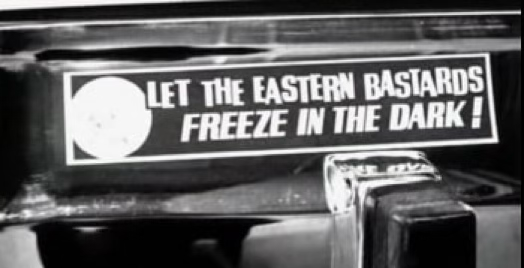
Constant flow of corporate money and modern media climate allow public opinion to be shaped by social media algorithms. Albertans get told a populist lie that if only they secede they would not have to pay any taxes, magically funding everything with retirement funds. There are no actual detailed plans of implementation, it’s posturing, neither separatist project holds against scrutiny, their logical conclusion is being exploited by the nation they want to secede to. Much like in Ukraine, there isn’t really a public information campaign to combat these narratives, the elites are simply allowed to misinform the public, feeding a political monster of separatism they expect to stay in control of.
Leaders of the movement
Back in Ukraine it’s 2003 an oppositional candidate Viktor Yushchenko is gaining popularity, so he’s touring the country to campaign. Eastern elites naturally oppose him, so mysteriously venues where he wants to rally suddenly turn out to be “under renovation” and local TV channels just go off air when an interview was scheduled or outright deny airtime (Kazanskyi and Vorotyntseva 72). Despite these acts being clearly criminal, these elites still had limits in how much they can bend the law. Which is why they needed various cranks to do their bidding. The tiny and unpopular Slavic party took a firm position against Yushchenko, accusing him of being a nazi and hating Russian speakers (Ukrains’ka Pravda). They suddenly came up with funds for ad budget and covered Donetsk with billboards portraying Yushchenko as Hitler. His father had served in the Red Army and spent 4 years in a nazi concentration camp. This party also managed to get a couple thousand-sized crowd to protest Yushchenko’s rally, who in return were given alcohol and candy made by the local factory owned by the secretary of the regional council. Rally was disrupted with chants, music, Yushchenko’s team was blocked from their plane both into and out of the city, protestors bused in (Ukrain’ska Pravda). Drunk crowds hurt the public image of the region and added to the culture war, but they succeeded in cementing the idea that Yushchenko is hated in the East, while his outrage at local government was clipped out of context and spun as him hating the eastern population.
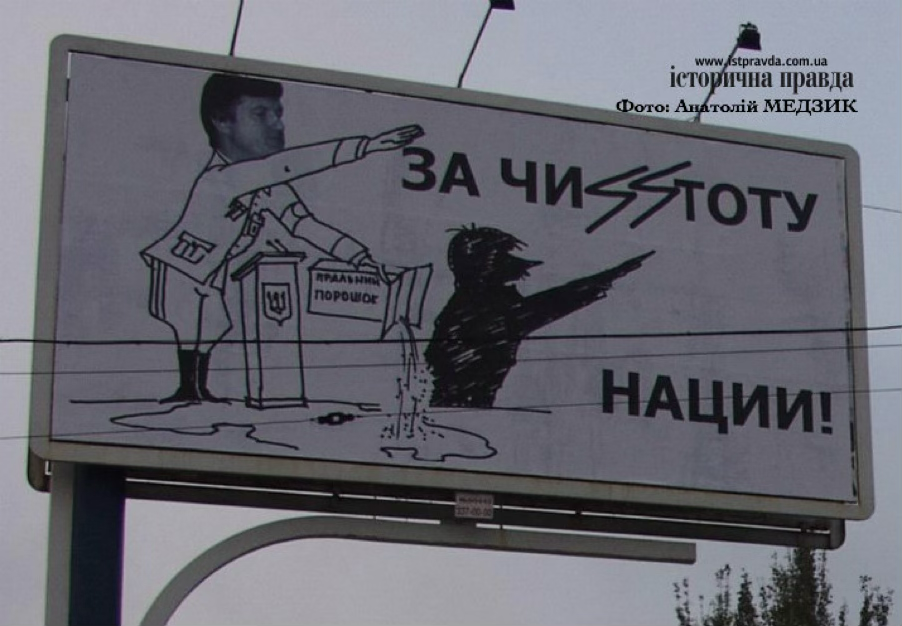
Giving these cranks platform and power was seen as a cheap political stunt, yet it ended up shaping the way Donbas and the West of the country viewed each other. It allowed these cranks to slip into Donbas politics. Much in the same way, Alberta separatist cause is strongly signal boosted by the MAGA movement online, and a big part of said movement used to be the 2022 Freedom convoy, an anti-COVID regulation rally of truckers that was infested with alt-right actors and conspiracy theorists (Wesley). And once these cranks get platformed it becomes extremely hard to rid your cause of them. MAGA used to be seen as a fringe flank of the Republican party. Now they are the Republican party, the Republican party is unimaginable without them, and their weird conspiracy theories get pandered to by the government despite having no basis in reality, which only spreads their narratives further.
After various election interference tactics, including straight up poisoning, the official result declared Yushchenko to be the loser, while exit polls clearly showed otherwise, so people all over the country were protesting a rigged election. Donbas political elite felt threatened and threw a tantrum. Sievierodonetsk Congress was an event organized by the Donetsk clan, but it included members of the Yanukovych's party at the highest levels of power: members of parliament, ministers and Luzhkov, acting mayor of Moscow. The rhetoric was openly secessionist, not merely pro Federalization but outright threatening to form a South-Eastern Republic if the government dared to order another round of voting (Ukrains’ka Pravda). Their mistake turned out to be criticizing still sitting President Kuchma for not cracking down on Yushchenko enough. The 3rd round of voting was ordered, officials threatening secession walked back their threats, Yushchenko won. And once he came into power, he… did nothing about this. Secessionists largely kept their jobs, prosecution went nowhere and the new governor of Donetsk was a figure favored by the Donetsk elite with a history of secessionist threats, while in Luhansk the newly established governor was simply blocked from doing anything to secessionists and within a year left office. The threat of treason was not punished and most of the secessionists would return to pushing this rhetoric again, for a while shifting it back to federalism, misattributing centralized government to Yushchenko instead of Kuchma, whom they had previously supported (Kazanskyi and Vorotyntseva 103-120).
The extent to which culture war defined that election has polarized people along regional lines. It’s not unheard of in politics to vote for “your guy” from your area and for there to be some interregional strife. But the degree of it was abnormal. The idea that West and East hate each other became more widespread, certain fake narratives from that election campaign remained in the minds of Ukrainians long after. And of course, populists were only happy to ride that wave, you didn’t need to deliver actual reforms, simply promising to fight the evil Banderites or the treasonous Vatniks could get you enough support. Various conspiratorial crackpots popped up in the Donbas, allowed to exist by the political elite because they kept some of their base radicalized against their enemy and who knows, you might one day need some delusional street thugs (Kazanskyi and Vorotyntseva 121-130).
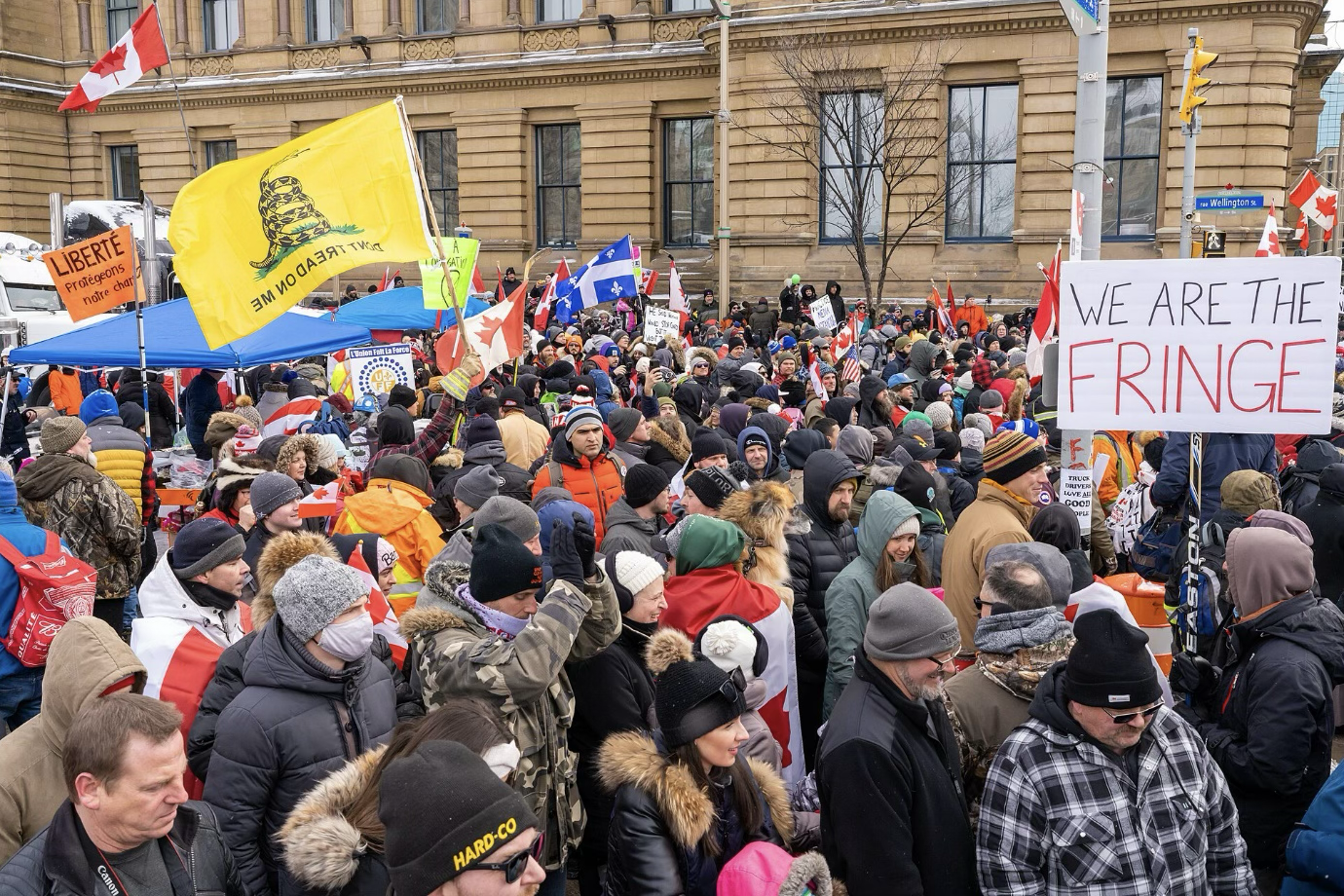
Getting Alberta back into focus, Freedom Convoy and the MAGA crowd are aligned and intertwined with the separatist movement. If the openly treasonous threats are not treated seriously these people don’t go away, and neither do their ideas. Despite Yushchenko not doing anything about the secessionists who fearmongered with conspiracy theories, and none of those theories coming true, the narratives continued to exist despite contradicting objective reality even after he left office.
Granted, Freedom Convoy has been cracked down on, and their bank accounts have been frozen. And when the Alberta governor tried using misleading and vague phrasing in the referendum the Clarity act was brought up as potential counteraction (Paul). However, the separatist Centurion project also somehow obtained the list of electors and posted an online database, doxing 3 million voters(Snowdon). And materials published by the Alberta prosperity project invoke phrasing such as “WEF-UN Marxist agenda”, and anyone who’s interacted with Alberta independence supporters online knows this isn’t a one off. Ignoring such people will only end up normalizing these tactics and narratives.
Political platform
It’s 2010, Yushchenko’s presidency is coming to an end. The coalition he used to come to power collapsed and most of his tenure was spent infighting and forming new parliaments. The promises of big reforms weren’t delivered on. Things didn’t get worse, but the political momentum was wasted. Viktor Yanukovych runs again with support of Russian political technologists and wins against Yushchenko’s former ally Yulia Tymoshenko. The election is split along the West-East culture war divide, except for the far western Zakarpattia region voting for Yanukovych due to the collapse of Yushchenko’s coalition. For 6 years have Yanukovych's allies pushed for ideas of federalization, economic partnership with Russia and Russian language culture war talking points. However EU membership is popular, so he runs on both Russia and the EU, continuing to move towards the EU. And once in power he sees no point in federalizing, why would he want to give up political power. There appears to be a split between what the party pushes and what the president does (Kazanskyi and Vorotyntseva 131).
As previously mentioned, Russian politicians were already involved in the secession movement, directly and financially. They have spent previous decades fighting numerous wars with and propping up secessionist movements in former soviet republics: Moldova and Georgia. Russia had already tried taking Tuzla Island near Crimea. Yet this was not treated seriously. In their interviews Ukrainian border guards involved in the Tuzla Island conflict admit that the threat of Russia wasn’t something they trained for or had a strategy for (Kyiv Independent). Russia didn’t like Ukraine moving towards Europe and used gas deals as a threat tactic. Yanukovych maintaining a pass to the EU was seen as unacceptable by Russian leadership. Even after he signed the Kharkiv pact, extending the lease of the Crimean naval base until 2042 and de-facto making any move towards NATO impossible up to that point, that wasn’t sufficient for Russia. Because of course, it was never about NATO.
So, Russia propped up a guy in Yanukovych's party to push him further towards Russia. Viktor Medvedchuk, whose child had been Godfathered by Putin fit this role. Various small crank groups in Donbas began to be united under a pro-Russian group cause, from Cossacks to communists, with support of organizations in Russia (Kazanskyi and Vorotyntseva 139-147). They weren’t doing much yet, but the network was being set up. Besides arguing for federalism and/or separatism, these groups were united behind Russian nationalism and recognizable anti-EU rhetoric, which largely remains unchanged to this day in every Eurosceptic movement-EU is gay, EU equals dictatorship, foreign businesses will steal your country. One diverging element of the mix was islamophobia, Syrian migrant crisis was yet to happen, and Ukraine hasn’t had a migrant problem, so the subject wasn’t brought up much. Islamophobia was still there but mainly shaped by Russian nationalism and Chechen wars.
Trying to keep Euromaidan brief: in 2013 an agreement on the pass towards EU membership was coming up and Russia was sabotaging it. It applied trade sanctions on Ukrainian exports, threatened with gas prices and Russian envoy to Ukraine Sergey Glazeyev issued threats that an EU deal would make the treaty delineating Ruso-Ukrainian border to be void. Yanukovych asks the EU for a huge baseless loan, the deal fails. This goes against his electoral promises and sparks student protests. Police brutally crack down on them, huge crowds come to protest police brutality, protests go on, Yanukovych pushes through dictatorial laws, protests spread further, police start shooting people in the streets and in the process of signing a deal with the protesters Yanukovych flees the country.
The same day, on his way out he and his prime minister made a stop in Kharkiv and were expected to come to the Kharkiv congress on February 22, 2014, yet haven’t. It was a gathering of all the secessionist politicians previously discussed, with quite a few guests from Russia: a member of parliament, a senator, a consul and governors of 3 regions (BBC). It didn’t amount to much but showed the scale of Russian involvement. Later on, the secessionist angle became spinning police violence as fighting against radical nationalists, pushing lies that most of the dead were western Ukrainians coming to Kyiv to overthrow an eastern president, fearmongering their region about gangs of violent Russophobic Ukrainian nationalists on their way to the East.
And while Crimea was being seized by unmarked Russian soldiers, the eastern regions and Donbas in particular had all the previously mentioned actors come into play: oligarch-owned media pushed scare stories about the interim government being full of Western Russophobic nazis(it was overwhelmingly formed from Tymoshenko’s party and in further held elections the nationalist parties failed spectacularly), which many believed because of previously established regional polarization, local politicians opportunistically rallied behind the secession, and groups of street thugs united behind Russian nationalism and interconnected with similar Russian groups, curated by Russian special services, went armed into the streets and tried seizing administrative buildings. Over two decades of us vs them narratives concluded with a violent crowd existing in an echo-chamber taking it out against their imagined enemies. In most places the outcome was their failure and senseless bloodshed. In Donbas they had more success.
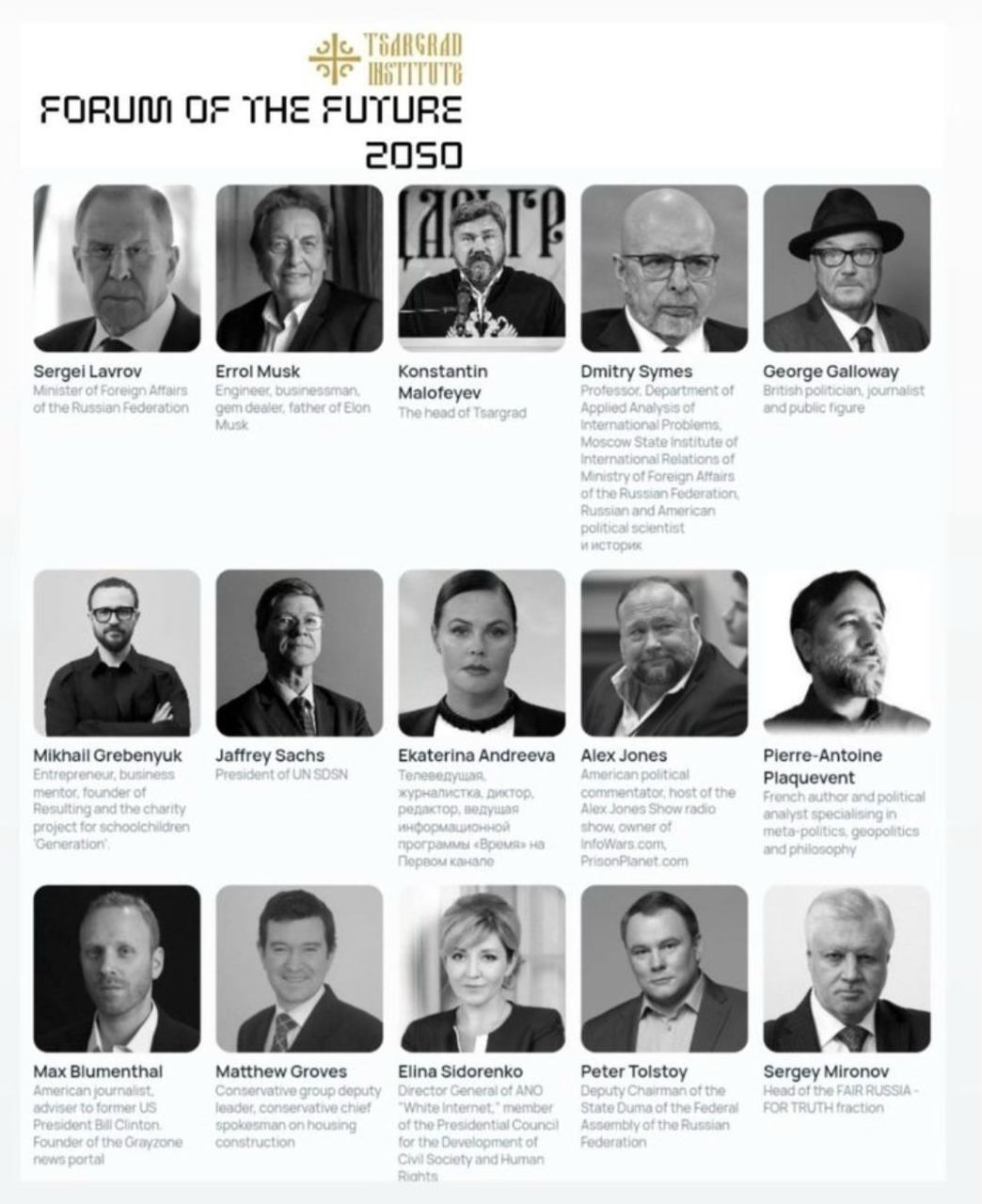
Trump administration members have held talks with Alberta separatists (Murphy and Yousif). The freedom convoy has had support of the republican party and American conservative pundits and an endorsement from Donald Trump (Neustaeter). American MAGA accounts on social media often boost the separatist cause. Another foreign actor here is Russia, using bot farms on social media to do the same (Faguy). Their goal is straightforward: disruption of western democracies. I’ve seen some on the left roll their eyes at numerous times Russia was caught supporting far right groups in the west. Sometimes it’s because the leftists in question are outright pro-Russian, but in other cases they claim it to be a way for their governments to shift responsibility abroad. Let me be abundantly clear. These movements being supported and used by Russia doesn’t make their participants less responsible. Russia doesn’t create these fascists from scratch. They find existing ones and give them tools to succeed. Tommy Robbinson, Benny Johnson, Tim Pool, Lauren Southern, Jackson Hinkle, Andrew Tate-these people weren’t bred in a Russian lab. Their movement is a failure of the society they exist in. You should hold people in those movements responsible. But pretending to not see these ties is a dangerous delusion.
Being a foreign asset doesn’t mean one is ideologically loyal to the nation they are an asset of. That’s something from a Cold War era movie. Most often they are opportunists, willing to accept foreign funding to advance their political goals or just in it for power, fame and personal wealth. The left is extremely familiar with the history of American involvement in various coups, so much so there’s a common false narrative accusing Euromaidan of being one. Why are only the western powers seen as capable of such tactics?
Future timeline
The Ukrainian interim government was hastily formed, weak and facing the annexation of Crimea. The Ukrainian military barely existed, its purpose was unclear to people and it was eaten up by corruption. Similar issues debilitated Ukrainian police, border patrol and special services. Thus, the country didn’t have much power to stop the separatists. Old political elites riled up the crowds and filled the news with disinformation, but they were outmatched in riding this wave by all the fringe pro-Russian organizations they kept around. Thugs from the streets began seizing power, and once they got it regional politicians and oligarchs were faced with the beast they helped create that was no longer abiding.
If someone outside Ukraine knows any Donbas separatist figure, it is Igor Girkin. A Russian special service agent with a history of fighting on the pro-Russian side in Moldova, Bosnia and Chechnya. A Russian nationalist and monarchist, with funding from Konstantin Malofeev, the same far right billionaire that funds groups fanning the flames of racism that led to the recent pogrom in Belfast (Nafeez). A man sentenced to life in prison in absentia by the Dutch court for downing the MH17 civilian airliner and currently serving a 4 year sentence in Russia for criticizing the regime’s failure to win the war (Pascoe). He claims he “pulled the trigger of war” in Donbas when he in charge of 50 armed men did a William Walker-style filibuster of Sloviansk, overnight gaining full control of a whole city, unlike other separatist warlords who only managed to get hold of individual administrative buildings. His man was declared mayor, local police fell in line and those who didn’t were tortured and killed (Kazanskyi and Vorotyntseva 283-290). He is the most prominent, “professional” and successful example of various Russian paramilitaries' involvement in the war in Donbas and it is indeed his actions that moved the Ukrainian government from negotiations to counter terrorism operation.
A less recognized, yet more indicative figure is Pavel Gubarev, the “People’s Governor of Donetsk”. A rather unknown figure before 2014, he had an advertising agency in Donetsk. He was also a member in both Progressive Socialist Party of Ukraine, a pro-Russian "socialist" party and in Russian national unity, an anti-migrant Russian neo-Nazi group. The uniting factors among the two being Pan-Slavism, bigotry and conspiracy theories. On March 1st, 2014, he and his supporters violently seized the scene of the separatist rally in Donetsk and he proclaimed himself governor, becoming the head of the movement. 6 days later he was arrested and sent to Kyiv, and when he came back 2 months later the power vacuum was already filled, he turned into a meaningless public figure (Kazanskyi and Vorotyntseva 197-209). He self admittedly used his position to seize some local businesses for himself and his friends, which is how everything in the region has been run since 2014. “Luhansk and Donetsk People’s Republics” are mafia quasi-states with no autonomy, though after full scale invasion Russia claimed them as parts of the country (including areas they never controlled) yet not much changed in the power structure. After the conflict entered the frozen phase Gubarev published his memoirs, and when the full-scale invasion began he signed up to fight on the Russian side. In 2026 he gave a long interview, in which he spoke proudly of being in nazi organizations, beating his wife, believing in world government and antisemitic conspiracy theories (Dud’). He told about being kidnapped by his comrades, various criminal schemes run by them, how he has never seen Zakharchenko, the leader of DPR until his death in 2018, sober. Gubarev isn’t a good speaker, thinker or leader, all his colleagues and enemies unanimously regard him as an idiot, the most remarkable thing about him is that he is still alive.
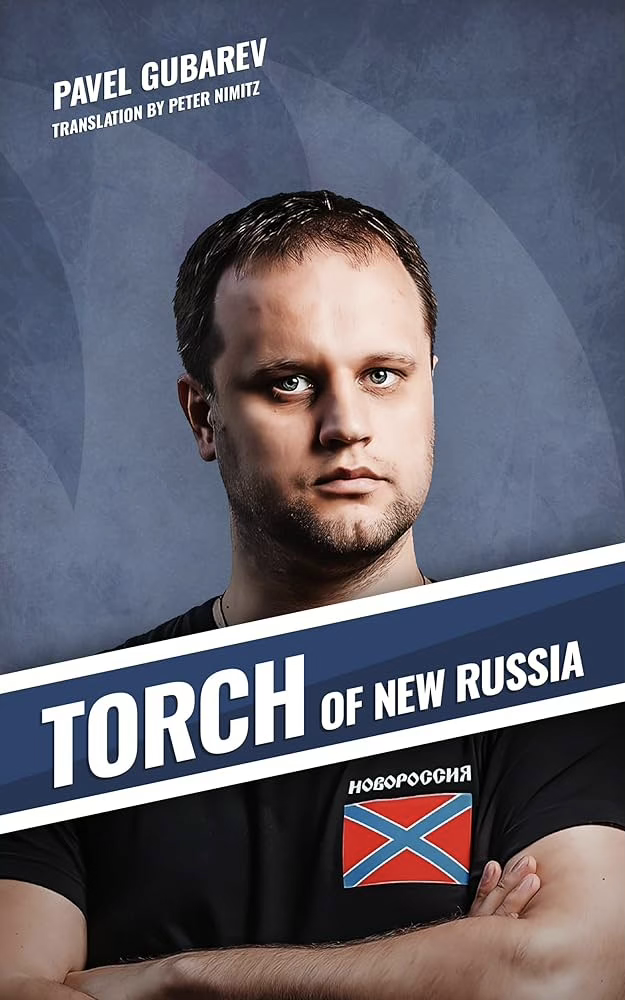
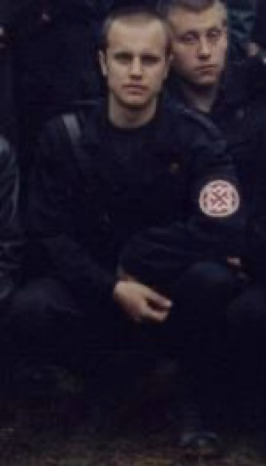
For, see, in their hybrid warfare strategy Russia propped people like this up, trained and armed them, in order to distance itself from the war they waged and be able to attribute it to “local militias”. Yet this was insufficient to win, the separatists were about to fail when the Russian regular army had to directly intervene. These were warlords constantly competing against each other, which made them both impossible to negotiate with and unable to stand on par with a centralized army. So, after Russia fully took over, those of the prominent separatist fighters and leaders that hadn’t been killed by either Ukraine in combat or their own in turf wars-those people ended up being killed by Russia. Because these lunatics are unreliable and Russia wanted someone following orders. Doesn’t mean efficient or good, the guy currently in charge of Russian occupied Donetsk is a Ponzi scheme scammer. As for Luhansk - their last leader has been couped by Donetsk leadership in 2017.
This movement self-selected for its worst elements, and each of them was expendable, no matter how moderate or radical, if they wanted federal status, independence or to join Russia, for the actual benefactor calling the shots - Russia. Some separatists being local and republics being called “the People’s” is an incredibly cheap trick, yet some people fall for it, viewing them as genuine liberation struggles. But once it came to fighting the separatist leaders berated Donbas population for not enlisting, and in towns separatists lost locals immediately shifted to claiming they never supported them. The coal and industrial economy of Donbas is dead and who knows if it’s ever coming back. Infrastructure is failing, in 2025 Donetsk had no running water. There is no law or democracy in the Russian-controlled parts of Donbas, some armed men can simply extort you on a whim. The region is an international pariah. It has been leveled by an avalanche of hate, destructive, indifferent and uncontrollable. The most people trying to ride that wave have managed to accomplish has been stealing as much as they could in the ensuing chaos.
Differences
So that’s pretty grim. It’s also different from what’s possible in Alberta. Canada is a G7 nation that’s in NATO and is led by a largely popular prime minister, unlikely to be as weak as Ukraine was in 2014. They have a “language question” but not in Alberta. In fact, the last time a “language question” has been raised in Alberta was in 1913, by, incredibly, Ukrainians. They aren’t getting out of the collapse of the USSR, their property is owned in the regular western capitalist way, and their salaries aren’t paid out in food instead of money. And sure, there exists some similarity in the American and Russian chauvinism, Canadians do get described as “basically Americans but with a silly accent”. But the nations have long been separate, the last big conflict was over 200 years ago, and American leadership isn’t writing long pseudohistorical essays about the war of 1812.
Lastly, Canadian leadership seems to be treating this threat seriously and actually using its power to fight it. Good. The separatist movement is nothing but a tool for destabilization of Canada, and every member of it should be seen as such.
Works Cited
- Ahmed, Nafeez. “Revealed: The Russian Neo-Nazi Network Pushing “White Lives Matter” Division in Britain – Promoted by Tommy Robinson.” Byline Times, 10 June 2026, bylinetimes.com/2026/06/10/revealed-the-russian-neo-nazi-network-pushing-white-lives-matter-division-in-britain-promoted-by-tommy-robinson/. Accessed 20 June 2026.
- BBC. “Харківський з’їзд оголосив про контроль над частиною Півдня і Сходу - BBC News Україна.” BBC News Україна, 22 Feb. 2014, www.bbc.com/ukrainian/politics/2014/02/140222_kharkiv_nk. Accessed 26 June 2026.
- Brooklyn Neustaeter. “Trump Calls Trudeau “Far Left Lunatic,” Expresses Support for Convoy.” CTVNews, 5 Feb. 2022, www.ctvnews.ca/canada/article/trump-calls-trudeau-far-left-lunatic-expresses-support-for-convoy/. Accessed 25 June 2026.
- Denys Kazansʹkyĭ, and Maryna Vorotynt︠s︡eva. How Ukraine Lost Donbas. Kyiv, Ukraine, Chorna Hora, 2020.
- Dud'. “Губарев – кто управляет Путиным, миллион погибших, кто сбил Боинг / вДудь.” YouTube, 9 Apr. 2026, www.youtube.com/watch?v=1WL01TyVOGU.
- Faguy, Ana. “US and Russia Fuelling Separatist Debate in Canada, New Report Says.” BBC, 6 May 2026, www.bbc.com/news/articles/cze2dnn8kgwo.
- Kyiv Independent. “Crimea: The War before the War | PART 2.” YouTube, 20 Mar. 2026, www.youtube.com/watch?v=c0nx6JkWR1g. Accessed 26 June 2026.
- Murphy, Jessica, and Nadine Yousif. ““Respect Canadian Sovereignty”, Carney Tells US Officials after They Meet Alberta Separatists.” BBC, 29 Jan. 2026, www.bbc.com/news/articles/cr57j780pgmo.
- Pascoe, Robin. “Igor Girkin, Who Helped Shoot down MH17, Is Jailed in Russia - DutchNews.nl.” DutchNews.nl, 25 Jan. 2024, www.dutchnews.nl/2024/01/igor-girkin-who-helped-shoot-down-mh17-is-jailed-in-russia/. Accessed 26 June 2026.
- Snowdon, Wallis. “Elections Alberta Issues Cease-And-Desist Letters over Voter Info Breach, Privacy Commissioner Launches Probe.” CBC, 7 May 2026, www.cbc.ca/news/canada/edmonton/centurion-project-alberta-voters-list-leak-9.7191390. Accessed 29 May 2026.
- Tasker, John Paul. “Carney Calls Smith’s Alberta Referendum Question a “Dangerous Bluff.”” CBC, 25 May 2026, www.cbc.ca/news/politics/alberta-referendum-carney-9.7211128. Accessed 10 June 2026.
- Ukrains'ka Pravda. “На съезд сепаратистов не приехали депутаты. 20 тысяч ющенковцев кричат “Ганьба.”” Украинская правда, 4 Dec. 2004, www.pravda.com.ua/rus/news/2004/12/04/4383623/. Accessed 26 June 2026.
- Wesley, J., 2022. Alberta Separatism and the Freedom Convoy: A New Western Alienation, Public Order Emergency Commission (Canada). Canada. Retrieved from https://coilink.org/20.500.12592/hnrp3c on 23 Jun 2026. COI: 20.500.12592/hnrp3c.
- —. “Война в Донецке дала народного президента.” Украинская правда, 31 Oct. 2003, www.pravda.com.ua/rus/news/2003/10/31/4375160/. Accessed 26 June 2026.
- ---. “Ющенко выступит в Донецке. Без музыки, но с русскими шовинистами.” Украинская правда, 30 Oct. 2003, www.pravda.com.ua/rus/news/2003/10/30/4375151/. Accessed 26 June 2026.